
About 27 million people are enslaved from around the world today and 80% of them are women and children due to their heightened vulnerability caused by gender discrimination, lower rates of education and economic empowerment. According to the UN Office on Drugs and Crime, Trafficking in Persons: Global Patterns, as of 2006, around 161 countries have been affected by human trafficking as receiving, sending and transit destinations. Victims of trafficking can be of any age and gender. However, women are more involved in human trafficking as both victims and culprits. Most trafficking is carried out by people whose nationality is the same as that of their victim.
Given the definition and statistics of human trafficking, there seems to be three constituent elements; the act, the means and the purpose.
SOURCES:
- The Act
- The Means
- The Purpose
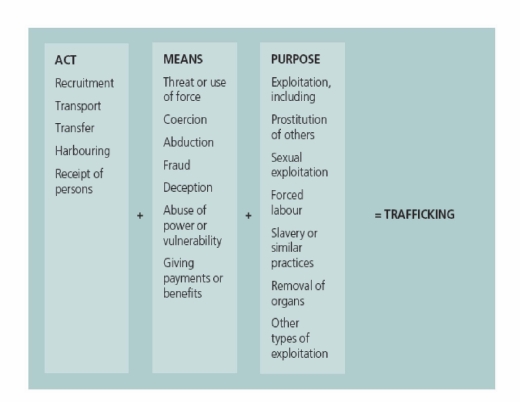 |
| Trafficking in Persons Protocol and the constituent elements of the offense. (UNODC) |
SOURCES:

No comments:
Post a Comment